






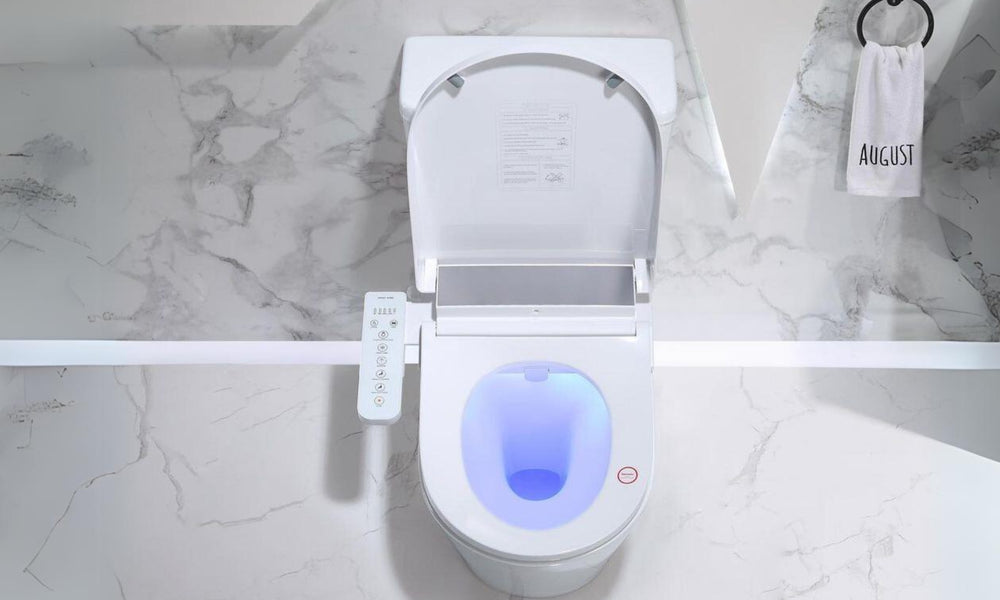




























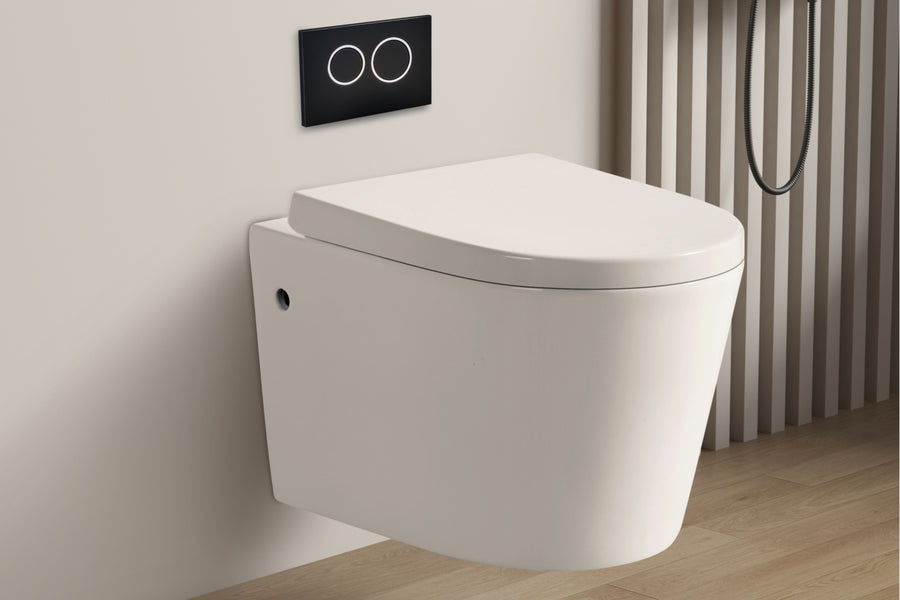





Smart toilet maintenance gets confusing fast because different brands use the word “filter” to mean different things. In most TOTO-style smart toilets and WASHLET bidet seats, there are two main “filters” homeowners should actually care about:
-
The deodorising filter - an air filter that supports the deodoriser fan
-
The water inlet filter - a small mesh screen or filter-drain valve that protects the unit and keeps wash pressure consistent
The key to replacement timing is this: most filters are designed to be cleaned on a schedule and only replaced when they are damaged or performance does not recover after cleaning. TOTO’s guidance commonly points to cleaning the deodorising filter about once a month and cleaning the water filter about once every 6 months, with earlier cleaning if you notice weaker water pressure.
Below is a homeowner-friendly, expert-level guide to what each filter does, what “normal” performance looks like, what symptoms mean, and how to set a maintenance routine that actually fits Australian conditions.
Why Smart Toilets Have Filters In The First Place
A smart toilet is a small appliance connected to your plumbing. It has precision components like solenoid valves, flow controls, heaters, and sometimes fans. Filters are there to protect those parts.
-
Air-side filters keep dust out of the deodoriser fan pathway so air continues to move through the deodorising system effectively.
-
Water-side filters catch grit and sediment that would otherwise clog the internal valves and nozzles, which is the most common reason bidet spray gets weaker over time.
If you treat filters as “set and forget,” you usually end up with one of two outcomes:
-
You think the smart toilet is “underpowered” when the real issue is a clogged water screen.
-
The deodoriser becomes noisy or ineffective because airflow is restricted.
Filter type 1: Deodorising filter (air filter)
What it does
When the deodoriser runs, air is drawn through the unit. The deodorising filter helps keep dust and lint from building up in the deodoriser path, which preserves airflow and odour control.
Cleaning Frequency That Actually Matches Real Use
TOTO documentation and guidance commonly recommends cleaning the deodorising filter about once a month, with the practical note that you can do it more often if your bathroom is dusty, you have pets, or the toilet is heavily used.
Signs The Deodorising Filter Needs Attention
These are the tells that the filter is clogged enough to matter:
-
Odour control is noticeably worse even though the deodoriser is “on”
-
The deodoriser fan sounds louder, strained, or higher pitched
-
You see visible lint or dust build-up
When To Replace The Deodorising Filter
Replacement is usually needed when:
-
The filter mesh is torn, warped, or will not seat properly
-
Cleaning does not restore airflow and odour performance
-
The filter has become brittle or misshapen (often from age or harsh cleaning)
Most homeowners replace this filter infrequently. If you are cleaning monthly, replacement often becomes a “when needed” event rather than a fixed calendar date.
Filter type 2: Water filter (inlet screen, filter drain valve, supply filter)
What it does
This is the filter that most directly affects the bidet wash experience. In many TOTO manuals it is referred to as a Water Filter Drain Valve or similar. It contains a small mesh that catches sediment before it enters the unit.
Cleaning frequency that actually prevents problems
TOTO WASHLET manuals commonly specify cleaning the water filter about once every 6 months, and sooner if you think water pressure has weakened.
That “if you think water pressure has weakened” line matters. It is basically the manufacturer telling you that weak spray is often a filter issue, not a “broken bidet” issue.
What “weak spray” really means
A properly working smart toilet wash is generally steady and consistent at the same setting. Filter clogging tends to show up as:
-
Spray feels weaker at all settings than it used to
-
Spray pulses or fluctuates slightly
-
Warm water takes longer to arrive (sometimes linked to reduced flow)
-
Performance changes when other fixtures run, which can expose borderline flow issues
If you clean the water filter and things improve immediately, you have your answer.
When to replace the water filter
Most water inlet screens are not replaced on a strict schedule. Replace when:
-
The mesh is damaged or permanently deformed
-
Sediment has embedded into the mesh and cleaning does not restore flow
-
You cannot re-seat the part properly (poor seal or fit)
In many setups, the “replacement” is simply ordering the specific filter part for your model and swapping it during normal maintenance.
The Practical Replacement Timing Homeowners Should Follow
Instead of “replace every X months,” use a two-layer approach:
Layer 1: Scheduled cleaning
-
Monthly: deodorising filter clean
-
Every 6 months: water filter clean
Layer 2: Replace only when evidence tells you to
Replace a filter when one of these is true:
-
Physical damage
-
Cleaning does not restore performance
-
The part no longer fits securely
This approach avoids unnecessary spend and keeps performance consistent.
Australian Conditions That Change Filter Timing
Australia is not one uniform water environment. Two homes in the same city can have very different outcomes depending on local pipework, renovations, and whether toilets are on mains water or tank supply.
1. Sediment After Plumbing Work
If you have had a plumber work on supply lines, a hot water system, or any bathroom renovation, it is common for debris to move through the line afterwards. That is when a water inlet screen can clog quickly. After any plumbing work, it is smart to check wash performance and clean the water filter earlier than the usual 6-month mark.
2. Rainwater Tank Supply To Toilets
Some Australian homes plumb toilets to rainwater tanks. If the pump system is not well filtered, sediment can be more frequent, especially after heavy rain. Expect to clean the water inlet filter more often in these homes.
3. Hard Water And Scaling
Harder water can contribute to build-up on nozzles and internal parts. This is not always solved by the inlet filter alone. The inlet filter catches grit, but dissolved minerals can still leave scale over time. If you see a gradual decline in spray quality, you may need both filter cleaning and the manufacturer’s recommended nozzle or descaling maintenance for your unit.
A simple “diagnose it like a pro” checklist
When performance changes, do not guess. Use this order:
-
Deodoriser seems weaker or noisier - Clean deodorising filter first. Monthly cleaning is the baseline.
-
Bidet spray is weaker or inconsistent - Clean the water filter drain valve or inlet screen first. Many manuals point to 6-month cleaning and sooner if pressure weakens.
-
No change after cleaning - At that point, replacement of the filter part may be justified, or you may be dealing with a supply issue such as a partially closed isolation valve, a kinked flexi hose, or a pressure limiting valve set too low.
This is how you avoid wasting money on parts and avoid blaming the toilet when the issue is actually supply-side.
Cleaning basics without turning this into a service manual
A few principles will keep you safe and prevent damage:
-
Follow the shutdown steps in your model’s manual. Many water filter procedures explicitly warn not to remove the filter while the shut-off valve is open because water can spurt out.
-
Use gentle tools. A toothbrush or soft brush is commonly referenced for cleaning filter mesh.
-
Avoid harsh chemicals on plastics and seals. Stick to mild cleaners where the manual advises. Harsh solvents and abrasives can damage components and shorten part life.
If you are writing for homeowners, the most helpful thing is to emphasise safety and the idea that filter maintenance is usually simple, but it needs to be done in the right sequence.
Should you add an external inline water filter?
Some homeowners consider adding a small inline filter to reduce sediment reaching the unit. This can help in homes with frequent grit in the water, but it also adds another maintenance item. If you do this:
-
Choose a filter that does not restrict flow excessively.
-
Maintain it on a schedule.
-
Make sure it is installed correctly so it does not create leaks or compliance issues.
For many homes on stable mains water, the built-in inlet screen and normal cleaning is enough.
How to turn this into a maintenance routine that sticks
Here is a routine that works in real households:
-
Put a recurring reminder for the first weekend of each month: clean deodorising filter.
-
Put a reminder for every 6 months: clean water inlet filter.
-
Add one extra rule: clean the water filter early if bidet pressure drops.
This is exactly aligned with the kind of intervals commonly specified in TOTO manuals and guidance.
Quick Fix for Your Filter
-
Deodorising filter: clean about monthly. Replace only if damaged or cleaning does not restore odour control.
-
Water inlet filter: clean about every 6 months, and sooner if wash pressure drops. Replace only if damaged or cleaning does not restore flow.
-
If performance changes suddenly after plumbing work or on tank water, check the water filter early.


