


































A bathtub should fit the room before it impresses the eye. If circulation pinches, cleaning becomes awkward, and plumbing ends up overcomplicated, even a premium bath will feel like a design mistake. The best approach is layout-first: measure the usable footprint, confirm floor capacity, note existing waste and water locations, then choose the bath type that suits how you actually use the space (daily family function, guest convenience, or a true ensuite retreat). Once those fundamentals are right, style becomes the easy part.
When the bath is selected to suit the architecture, it improves comfort, enhances visual balance, and protects long-term value. Below is a practical guide to matching bath types to common bathroom layouts in larger Australian homes.
Proportion and circulation
Start with movement, not finish. A bathroom can be generous on paper and still feel “blocked” if the bath interrupts the natural line between entry, vanity, shower, and storage.
Focus on three layout cues:
-
Walkway width and turning space: You want enough clearance to move past the bath without sidestepping, especially around the vanity and entry.
-
Cleaning access: If you cannot comfortably reach around the bath, you are committing to grime lines and hard-to-maintain edges.
-
Visual alignment: Baths look best when they either sit deliberately on an axis (centred to a window, aligned with a wall line) or integrate quietly into the perimeter.
In narrower rooms, wall alignment usually wins. In square rooms, symmetry or intentional off-centring matters more than the bath “style”.
Built-in baths for ordered layouts


Built-in baths are still the most reliable solution when you want clean geometry, predictable waterproofing zones, and efficient use of space. They suit:
-
family bathrooms where durability and easy cleaning matter
-
layouts that share a wet zone with a shower
-
long, narrow rooms where every centimetre affects circulation
They also make it easier to incorporate ledges, niches, and practical storage without the bath becoming a centrepiece that demands attention.
Where they fall short: in a high-end ensuite, a built-in bath can feel visually “standard” unless the surrounding joinery, stone, tapware placement, and lighting are handled with intention.
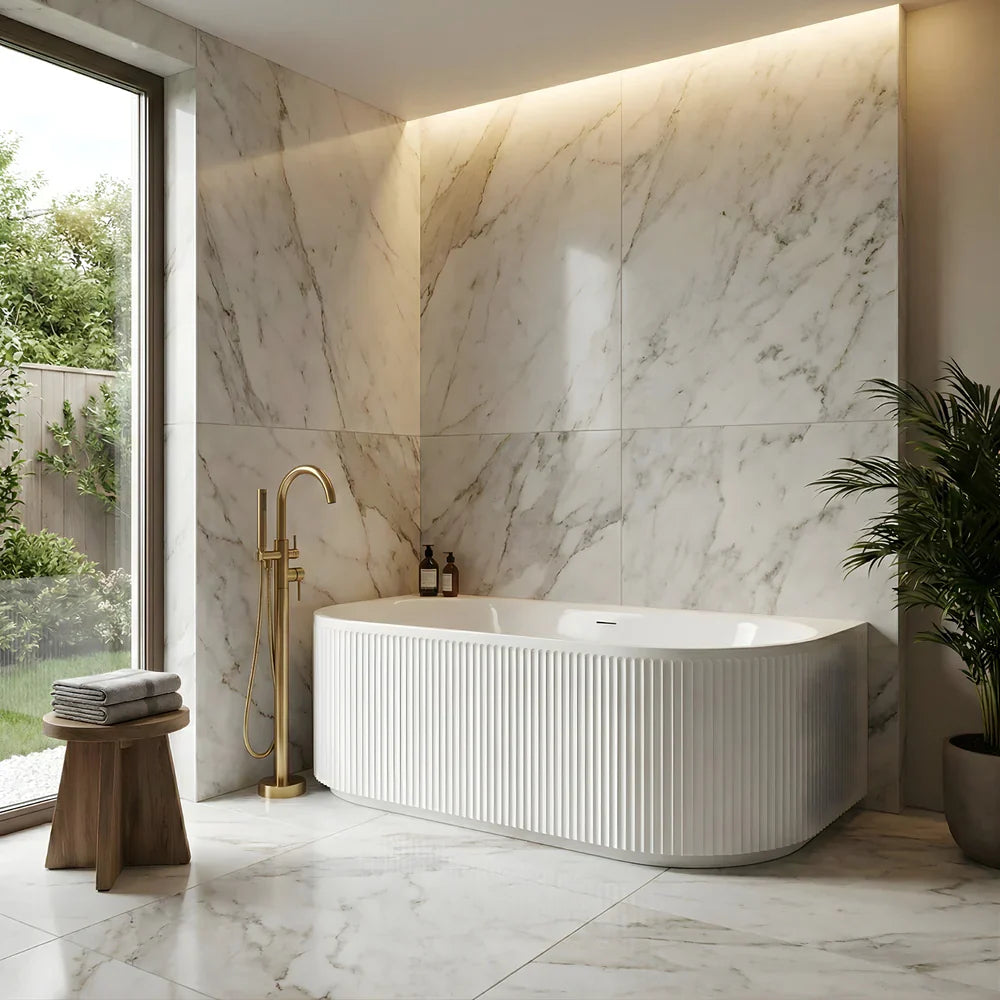
Back-to-wall baths for a refined middle ground


Back-to-wall baths give you the sculptural front profile people like in freestanding designs, while keeping the rear edge tight to the wall. This has real layout benefits:
-
fewer dust-trap gaps behind the bath
-
simpler plumbing concealment
-
a cleaner wall line, especially beside full-height tiling or panelling
They work well when you want a more luxurious look without sacrificing order. They also suit bathrooms where you have the floor area for a statement bath, but not the appetite for cleaning around all sides.
A key detail: allow enough side clearance so it does not feel wedged in. Back-to-wall is “tailored”, not “squeezed”.
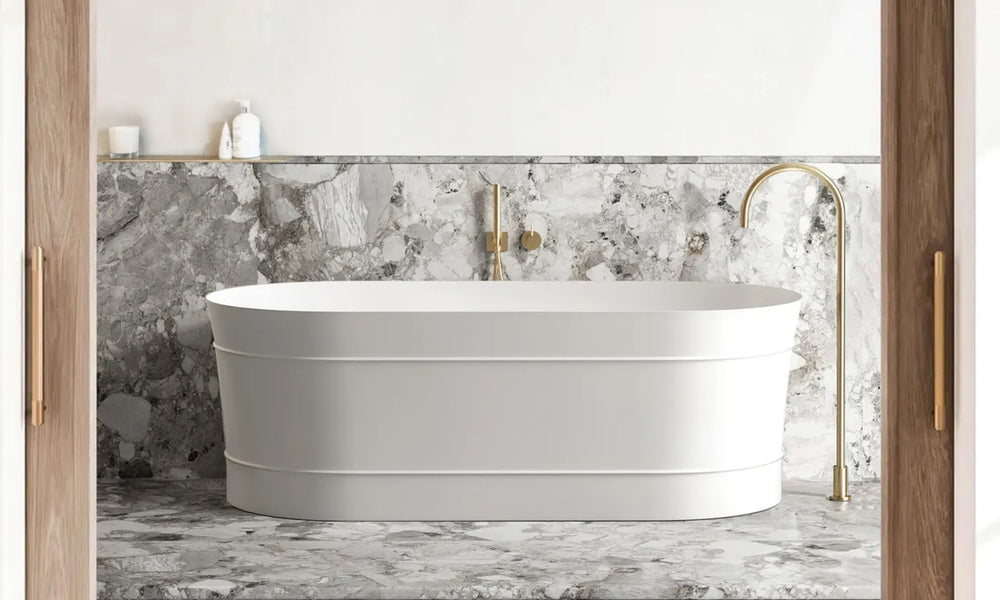
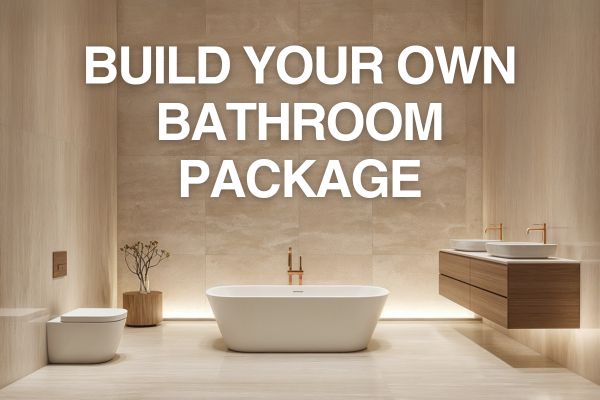
Freestanding baths for generous, open plans


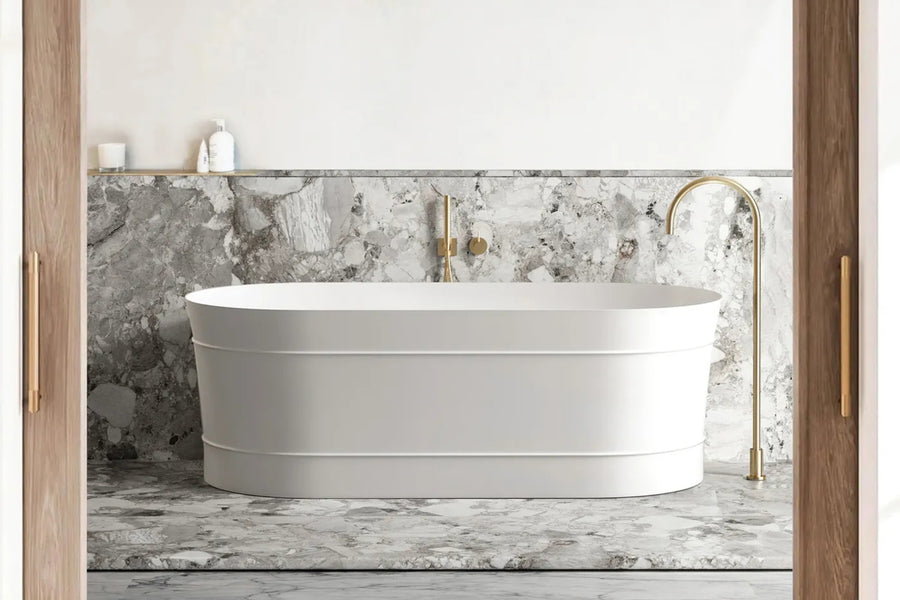
A freestanding bath can be outstanding in a large master ensuite, but only when the room can carry its visual weight. Done well, it creates a focal point that feels curated, not improvised.
Freestanding works best when:
-
the bath can sit with clear, comfortable space around it
-
its placement aligns with a feature: a window, a skylight, a wall sconce pair, or a view line from the entry
-
the rest of the fixtures do not compete (a cluttered vanity wall will undermine the bath instantly)
Where freestanding goes wrong is predictable: too close to walls, too near the doorway, or positioned where it interrupts the bathroom’s circulation logic.
Stone and solid-surface baths for true “retreat” bathrooms


In high-end Australian homes, stone or solid-surface baths often appear in ensuites designed like private spas. Their appeal is not only appearance. The mass and feel underhand tends to read more “architectural” than lightweight acrylic, and many owners value the more substantial soaking experience.
Practical considerations that matter in real projects:
-
Weight and floor structure: confirm early, especially on suspended floors or renovations where reinforcement may be required
-
Access path: some stone baths are difficult to manoeuvre through tight hallways or upstairs stairs, which affects labour and planning
-
Tapware planning: wall-mounted or floor-mounted mixers need early coordination so the installation looks intentional
These baths reward good planning. Without it, even a premium unit can create a compromised layout.
Corner and spa baths for specific constraints and priorities


Not every bathroom offers long, clean wall runs. In some square layouts, you can have plenty of total area but limited uninterrupted walls once doors, windows, and showers are placed.
Corner baths can be effective when they reclaim otherwise awkward space and free up longer walls for a double vanity or a walk-in shower. The trade-off is visual bulk. In refined settings, they need careful material choices and surrounding finishes to avoid looking dated.
Spa baths are a different category. They can be excellent when hydrotherapy is genuinely part of the brief, but they demand more planning:
-
more footprint
-
electrical and service access considerations
-
realistic expectations about maintenance
In a smaller bathroom, a spa bath often dominates the layout and narrows circulation. In a large ensuite with a wellness focus, it can be a deliberate luxury.
Quick comparison
Bath type |
Pros |
Cons |
|
Built-in |
Space-efficient, cost-effective, easy to integrate with showers |
Less sculptural presence unless detailed well |
|
Back-to-wall |
Clean wall line, easier cleaning, concealed plumbing |
Needs side clearance to avoid a “boxed in” look |
|
Freestanding |
Strong focal point, flexible placement |
Requires generous circulation and cleaning access |
|
Stone / solid-surface |
Premium feel, architectural presence, often better heat retention |
Heavier, higher cost, planning and access matter |
|
Corner |
Useful in awkward layouts, can create deep soak |
Can look bulky or dated if not designed carefully |
|
Spa |
Hydrotherapy, retreat feel |
Larger footprint, more services, more upkeep |
Materials and comfort features that change the experience
Material is not only a design decision. It affects how the bath feels week to week.

-
Acrylic: lighter, common, practical, and generally straightforward to install. It suits most homes and makes sense when the bath is used often and the layout is doing most of the “design work”.

-
Solid-surface or stone: more tactile and visually substantial, often preferred in statement ensuites. Plan early for weight, access, and tapware placement.
Comfort comes down to shape, not price tag. Look at:
-
Internal length and shoulder width: the external dimensions can be misleading
-
Backrest angle and lumbar support: critical for longer soaks
-
Depth and waterline: a deeper bath is not always better if it reduces comfortable reclining
-
Single-ended vs double-ended: single-ended often suits shower-bath combinations; double-ended suits symmetry and shared use
If the bath is primarily for occasional use, prioritise layout harmony. If it is used weekly, prioritise ergonomics and ease of cleaning.
Choosing The Right Bath For The Room

There is no universal “best” bathtub. The best bath is the one that respects circulation, proportion, and services.
-
If your bathroom needs order and efficiency, built-in and back-to-wall designs usually deliver the cleanest outcome.
-
If your ensuite is genuinely generous, and you want a focal point, freestanding or stone/solid-surface can feel exceptional.
-
If the room has awkward geometry or a wellness brief, corner and spa baths can work, but only when the footprint is justified.
A well-resolved bathroom feels effortless because the fixtures look inevitable. When the bath suits the layout, it stops being “an object in the room” and becomes part of the architecture.


