














































A new bathtub is a big investment, and keeping that flawless finish is easier than most people think. Scratches and chips usually come down to a handful of everyday habits, and once you know what causes them, prevention is simple. Whether you've just installed a freestanding acrylic bath or you're maintaining a stone or enamel tub that's been in the family bathroom for years, the same core principles apply: gentle cleaning, careful use, and knowing what to keep off the surface.
This guide walks through what actually causes the damage, how to prevent it based on your bathtub's material, and what to do if a scratch or chip does happen.
What causes scratches and chips in bathtubs
Most bathtub damage comes from three sources: abrasive cleaning tools, dropped or dragged objects, and harsh chemicals that soften the surface over time. Grit trapped in a sponge, a razor left on the tub floor, or a heavy shampoo bottle knocked over can all leave a mark. Chips are more often caused by impact, like a dropped bottle of bath salts or a slip with a bathroom tool during a renovation.
The good news is that almost all of this is preventable with the right daily habits, and the right habits depend a little on what your bathtub is made from.
How to prevent scratches on an acrylic bathtub

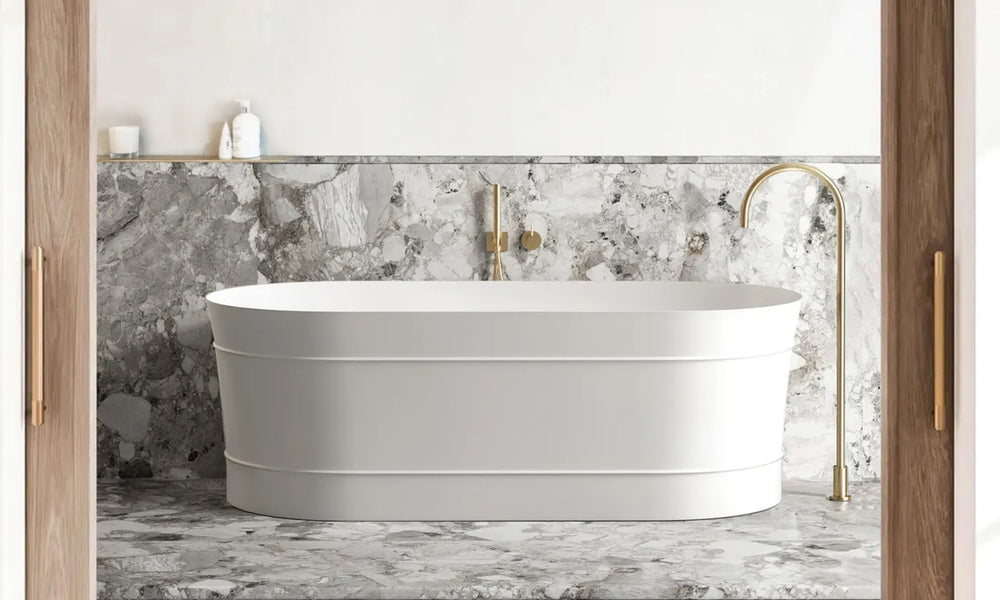
The best way to prevent scratches on an acrylic bathtub is to stick to soft cloths and non-abrasive cleaners, and to keep hard or sharp objects out of the tub altogether. Acrylic is a solid, glossy surface, which means the colour runs all the way through, but it's also softer than stone or enamel and marks more easily.
A few habits go a long way:
-
Use a soft sponge or microfibre cloth for cleaning, never scouring pads or steel wool
-
Avoid rubbing alcohol and abrasive cream cleansers, which can soften the acrylic surface and make it more prone to scratching over time
-
Place a rubber or silicone mat under bottles and razors rather than setting them straight on the tub floor
-
Lift objects in and out rather than sliding them across the surface
If your bathroom gets heavy daily use, a soft-bristled caddy or shower shelf keeps toiletries off the tub floor entirely, which removes most of the risk in one go.
Bath mats are worth a mention here too, since they cut both ways. A soft, non-slip mat protects the tub floor from dropped objects and reduces slipping, but mats with suction cups can trap grit and moisture underneath, which slowly wears at the finish. If you use one, lift it regularly to clean and dry underneath.
What to Avoid on an Acrylic Bathtub
Beyond the general list further down, acrylic has a couple of specific weak points worth knowing. Anything abrasive is the obvious one, but acrylic is also softer than most people expect, so even non-scratching chemicals can cause damage indirectly. Rubbing alcohol, nail polish remover, and paint thinner can all soften the surface, making it far more susceptible to scuffing from ordinary use afterwards. Stick to the manufacturer's recommended cleaner where possible, and when unsure, a mild dish soap is always a safe default.
How to prevent chips and cracks on a stone bathtub

Stone and stone composite bathtubs are harder wearing than acrylic, but they're more vulnerable to chipping from sharp impacts, since the material doesn't flex the way acrylic does. The main thing to avoid is dropping anything heavy or hard-edged into the tub, particularly glass bottles, metal fittings, or tools during a renovation.
Stone finishes are also sensitive to acidic products. Many manufacturers specifically warn against citric acid and vinegar-based cleaners, which can etch the surface and weaken it over time, making chips more likely down the track. Stick to a mild pH-neutral cleaner and a soft cloth, and if the bath has a matte finish, avoid anything abrasive since matte surfaces show wear more visibly than gloss.
How to protect an enamel or ceramic bathtub
Enamel and ceramic bathtubs have a hard, glass-like coating fused to a metal or ceramic base, which makes them naturally scratch-resistant, but the coating itself can chip if something heavy is dropped directly onto it. Cast iron bathtubs are particularly heavy, which actually helps here, since the tub itself won't shift or flex under impact the way a lighter tub might.
To protect the enamel finish long-term, avoid abrasive powders and steel wool, which can dull the glossy coating and create tiny surface scratches that trap dirt and grime. A soft cloth with warm water and a mild detergent is usually enough for regular care.
What not to use on your bathtub
Regardless of material, a few products consistently show up as culprits behind avoidable damage:
-
Abrasive pads and scouring sponges, including anything marketed for tough kitchen stains
-
Bleach and ammonia-based cleaners, which can dull acrylic and enamel finishes and cause discolouration over time
-
Vinegar and other acidic cleaners, particularly on stone and stone composite surfaces
-
Rubbing alcohol, which can soften acrylic and leave it more susceptible to scratching
When in doubt, a mild dish soap and warm water will safely clean almost any bathtub surface without putting the finish at risk.
What to do if your bathtub does get scratched or chipped
Light surface scratches on acrylic can often be buffed out with a fine polishing compound, while deeper scratches or chips usually need a proper repair kit or a professional restoration service. On stone and enamel surfaces, small chips can sometimes be filled with a colour-matched repair kit, but larger chips are best left to a professional, since a poor DIY repair job can be more obvious than the original damage.
If your bathtub is still under warranty, it's worth checking what's covered before attempting any repairs yourself, since some warranties can be voided by DIY work.
A simple daily routine to protect your bathtub
You don't need a complicated maintenance schedule to keep your bathtub looking new. A few small habits, done consistently, do most of the work:
-
Rinse the tub after each use to stop soap and product residue building up
-
Wipe it dry with a soft towel or cloth rather than letting water sit and evaporate on its own
-
Keep bottles, razors, and toys off the tub floor and on a caddy or shelf instead
-
Clean weekly with a mild, pH-neutral cleaner and a soft cloth
-
Address any dripping tap or leaking fitting quickly, since constant moisture wears down finishes faster than normal use
None of this takes more than a minute or two, and it's the difference between a bathtub that looks new for years and one that starts showing wear within months.
Choose a bathtub built to last
The easiest way to avoid scratches and chips is to start with a bathtub made from quality materials with a durable finish. Explore Austpek's full range of bathtubs to find a freestanding, built-in, or spa bath backed by a genuine warranty, so you can enjoy it looking its best for years to come.


