Why Choose a Floor Standing Vanity
A floor standing vanity sits directly on the floor and carries its own weight, which removes the need for a support frame inside the wall and means installation has fewer structural concerns than a wall hung equivalent. The solid base also conceals plumbing within the cabinetry itself, and where the top is undermounted, the benchtop reads as one uninterrupted surface from edge to basin.
- This construction generally allows for deeper drawers and more storage volume than a wall hung cabinet of the same width
- A freestanding bathroom vanity suits bathrooms where the floor space is available and a grounded, traditional look is preferred over a floating design
- For a broader comparison across mounting types, browse the full bathroom vanity range alongside wall hung and space saving options
Freestanding Vanities Explained
The terms floor standing and freestanding are used interchangeably across this range, both describing a vanity that stands on its own base rather than mounting to the wall. Freestanding vanities suit renovations where the bathroom layout already has plumbing in place at floor level, since there's no need to route pipework up inside a wall cavity.
- A freestanding bathroom vanity typically sits on a plinth, kickboard or exposed legs, depending on the brand and finish chosen
- Freestanding designs are common in Hamptons and traditional bathroom styles, where a grounded cabinet suits the overall aesthetic
- Weight capacity is rarely an issue with freestanding vanities, since the floor bears the load rather than a wall bracket
Floor Standing Vanities in This Collection
This collection spans a range of materials and price points across our floor vanities range, so the right choice depends on your budget and the finish you're after.
-
Custom Timberline cabinetry: Timberline vanity ranges such as the Elwood, Emmett and Delaware are made to order in Armidale, Australia, in single or double bowl configurations across all standard sizes
-
PVC-constructed ranges: Lukka and Ceto build their floor standing vanities from moisture resistant PVC, typically backed by a 10-year domestic and 5-year commercial warranty on the cabinet
-
Plywood and polyurethane designs: Otti's Byron, Noosa and Marlo ranges pair high moisture resistant plywood cabinets with stainless steel legs, with some models covered for up to 25 years
-
Aulic vanities bring MDF construction with anti-scratch, moisture-proof finishes and soft-close drawers to the range
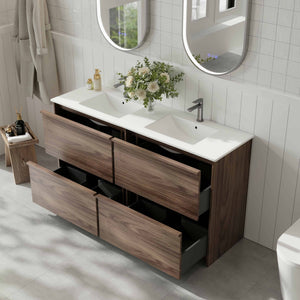
- A double vanity bathroom setup is available across most brands in this collection for shared bathrooms, typically from 1200mm wide
Completing a Floor Standing Vanity Setup
A cabinet is only part of the build. Most vanities in this range are sold without a top or basin, so you can mix and match to suit your bathroom.
- Pair your cabinet with custom vanity tops in stone, engineered surface or timber, checking undermount versus above-counter compatibility first
- Confirm tap hole position and count against your chosen mixer, since basin mixers aren't compatible with above-counter basins on most floor standing vanities
- Pop-up waste is commonly sold separately, so check the product listing before you order
- Measure your available floor width and depth, including clearance for the door or drawers to open fully, before choosing a size
Frequently Asked Questions
What's the difference between a floor standing vanity and a floor mounted vanity?
These terms describe the same style of vanity in this range. Both sit on the floor and carry their own weight, as opposed to a wall hung vanity, which is suspended from a wall bracket.
Are floor standing vanities harder to install than wall hung models?
Generally the opposite. They have fewer structural concerns since there's no need for a support frame inside the wall, and the solid base is more forgiving when it comes to concealing existing plumbing.
Can I fit an above-counter basin on a floor standing vanity?
Yes, most models in this collection support both above-counter and undermount basins. Above-counter basins allow more design variety and can be replaced without changing the whole vanity, while undermount tops give a seamless, easy-to-clean finish.
What size floor standing vanity do I need?
Sizes in this range run from around 390mm for compact and powder room spaces up to 1800mm or more for a double bowl setup. Measure your available floor width first, then allow clearance for the door or drawers to open fully.
How long is the warranty on a floor standing vanity?
Coverage varies by material and brand, from around 2 years on entry MDF cabinets up to 25 years on premium plywood ranges. Always check the specific warranty listed on each product before buying.