



When renovating a bathroom, choosing the right vanity style is one of the most important decisions you’ll make. Wall hung and freestanding vanities both have strong advantages, but they perform very differently once installed.
The best choice depends on your bathroom size, how much storage you need, the look you want, and how much flexibility you have with plumbing and installation. This article explains the differences in a straightforward way so homeowners can choose confidently and avoid costly mistakes later.
What Sets a Wall Hung Vanity Apart?
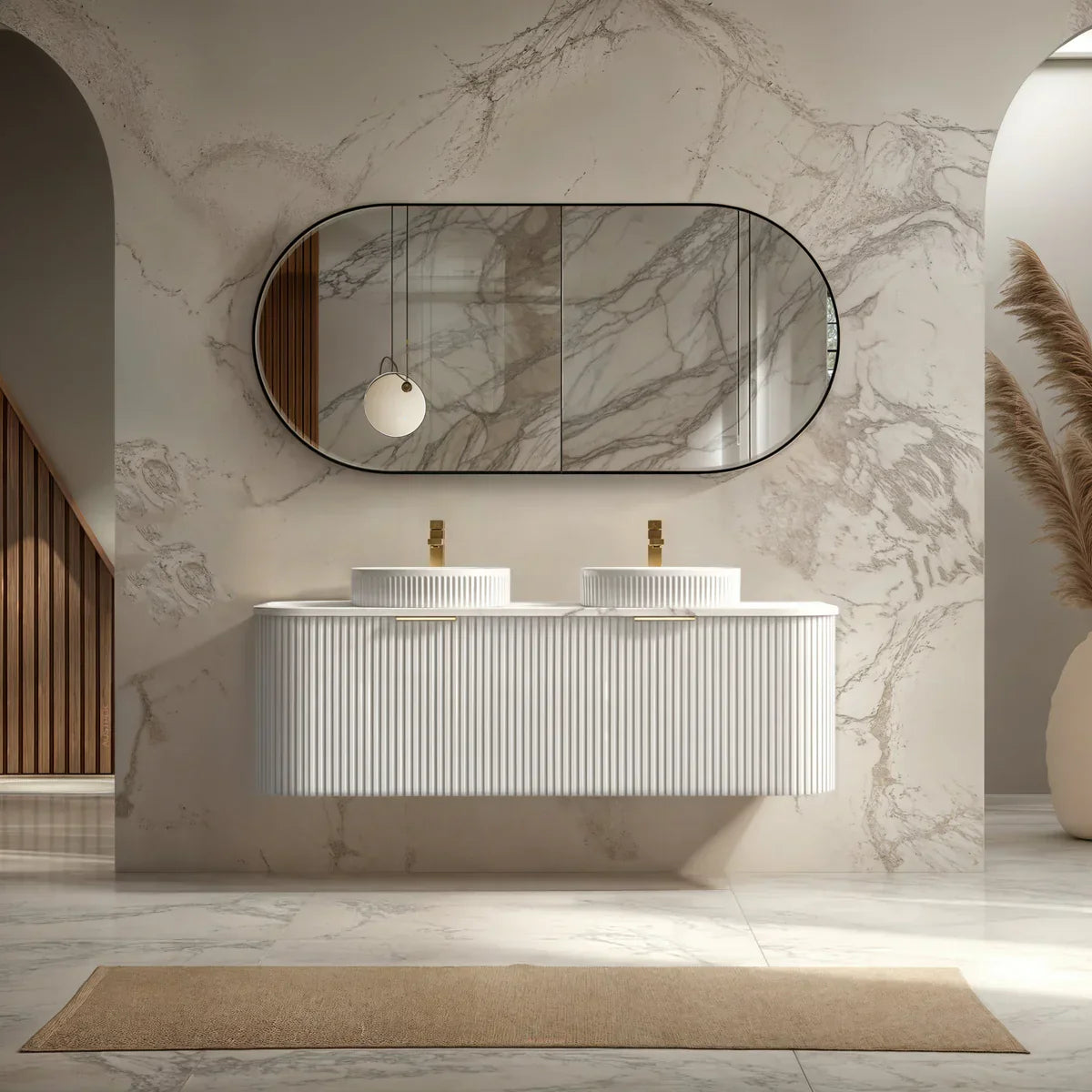
A wall hung vanity is mounted directly onto the wall so the cabinet sits off the floor. This floating appearance is the main reason homeowners choose it. The open space underneath instantly makes a bathroom feel lighter and more spacious, especially in smaller rooms where every bit of floor visibility counts.
Because it doesn’t touch the ground, a wall hung vanity needs strong wall support. It must be installed into timber studs or reinforced sheeting so the wall can safely hold the weight of the cabinet, benchtop and basin.
This is why wall hung vanities often require more planning and professional installation. However, once installed, they offer a clean, modern look that works well with contemporary design elements such as above-counter basins, LED mirrors and fluted finishes.
The space underneath also makes cleaning easier. There is no kickboard or legs to trap dust, and the floor can be wiped quickly. Wall hung vanities also allow for creative touches like under-vanity lighting, which adds soft ambience in the evenings.
What Makes a Freestanding Vanity Different?
Freestanding vanities sit directly on the floor, either with solid sides or with supportive legs. They behave like a piece of bathroom furniture rather than a mounted unit. This design naturally feels more grounded and substantial, making it suitable for traditional bathrooms or homes that prefer a more classic look.
Because the vanity supports its own weight, installation tends to be simpler. Reinforcing the wall is usually not necessary. Most of the work revolves around connecting the plumbing and ensuring the unit sits level against the floor. This makes freestanding vanities a popular choice for older homes, budget renovations or bathrooms where the walls cannot be opened or reinforced.
Freestanding units usually offer more internal storage simply because the cabinet extends all the way to the floor. With deeper drawers and larger internal space, they are practical for family bathrooms or anyone needing to store bulkier items.
The trade-off is cleaning. Dust and water tend to collect around the kickboard or legs, and the floor underneath the vanity is not accessible unless the unit has raised feet.
How Vanity Design Affects Your Space
The visual difference between the two styles is significant. Wall hung vanities create an open, floating look that makes rooms feel larger and more modern. They pair especially well with large floor tiles, minimalistic layouts and bathrooms where you want a clean, streamlined feel.
Freestanding vanities, on the other hand, provide a more solid presence. They can bring warmth and balance to a bathroom and fit beautifully in homes styled around Hamptons, farmhouse, coastal or classic interiors. Their furniture-like appearance works well when you want the vanity to feel substantial rather than airy.
Storage and Everyday Use for Wall Hung and Freestanding Vanities
Storage is one of the biggest deciding factors for many households. Wall hung vanities offer good storage but usually in a more compact way, especially if the depth is slim. They are ideal for people who prefer a clean bench and minimal clutter.
Freestanding vanities generally offer more space due to larger drawer capacity and full-depth cabinetry. Families often prefer this style because it can hold towels, cleaning products and toiletries more efficiently.
In day-to-day use, wall hung vanities make the bathroom easier to clean and give better visibility around the floor. Freestanding vanities keep everything contained but may require more attention at the base.
Installation, Weight Support and Maintenance
Wall hung vanities require the most preparation. The wall must be able to support the combined weight of the cabinet, benchtop, basin and stored items. This is especially important if you plan to install a stone or porcelain benchtop. Professional installation is strongly recommended to ensure the vanity remains stable long term.
Freestanding vanities do not need this level of structural support, making them simpler and more budget-friendly to install. They are also easier to replace in the future because they don’t rely on wall brackets or reinforcement.
In terms of long-term maintenance, both options perform well, but their cleaning habits differ. Wall hung designs free up the floor space underneath, while freestanding units conceal that area but may accumulate dust and moisture around the base.
Which One Should You Choose?
Choose a wall hung vanity if you want a clean, modern look, prefer easy floor cleaning, and want your bathroom to feel more open. It’s ideal for contemporary renovations and smaller rooms that benefit from visual lightness.
Choose a freestanding vanity if you need maximum storage, want a simpler installation, or are renovating an older home where altering the wall structure is difficult. It’s also perfect for bathrooms with classic or transitional styling.
Both styles can work beautifully, the right choice simply depends on your space, layout and lifestyle preferences.
Ready to choose your vanity? Explore our wall hung and freestanding collections to find the perfect fit for your space.

