


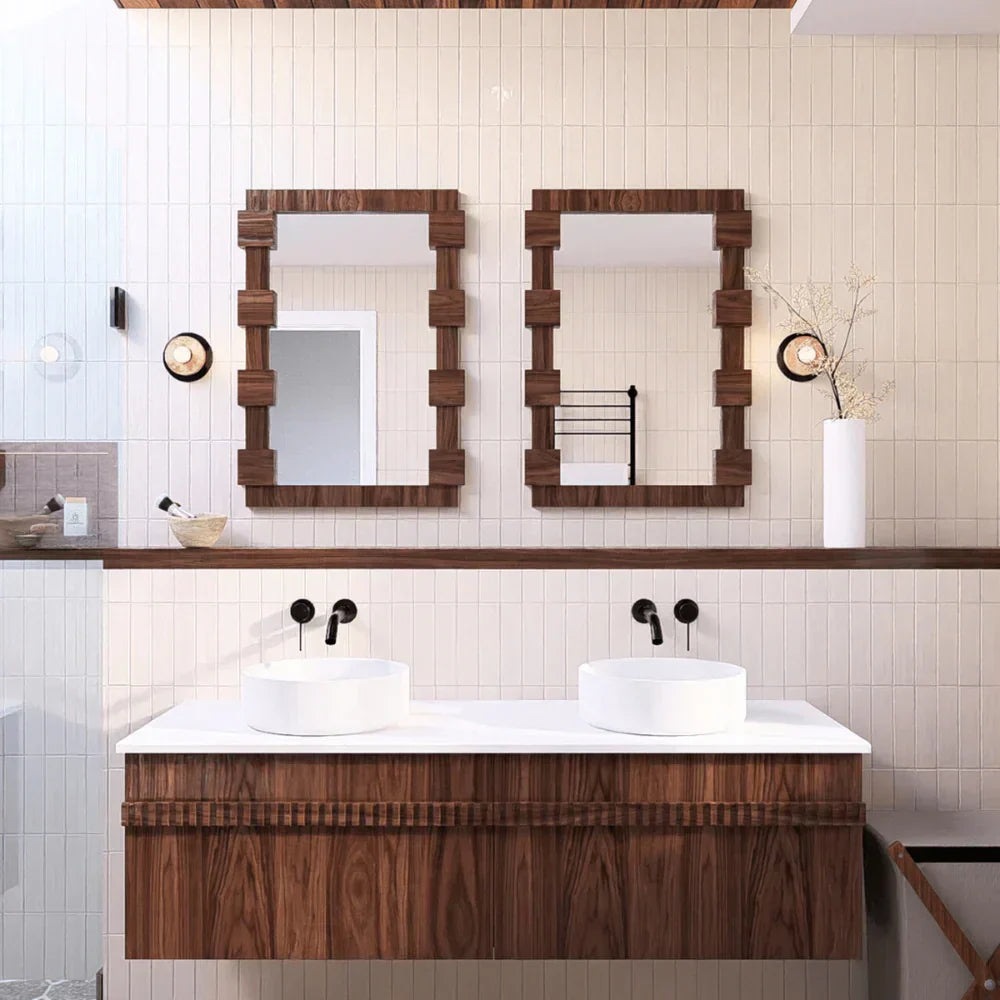
Vanity plumbing planning determines the success of your bathroom renovation before a single tile is laid.
The position of your waste outlet and water supply lines directly affects drawer functionality and usable storage. These positions are set at rough-in and cannot be changed after tiling without cutting tiles, redoing waterproofing, and reinstating finishes. What is a straightforward adjustment during rough-in becomes a costly rectification once the bathroom is complete.
There is also a compliance obligation that applies to every vanity installation in Australia. Licensed tradies, WaterMark certified products, and NCC wet area requirements are not optional. Overlooking them creates exposure across insurance, building certification, and property resale.
Getting the plumbing right from the start is not just good practice. It is the foundation everything else in the renovation is built on.
This guide covers the practical planning steps that keep you on the right side of both function and compliance, without trade-only jargon.
Compliance: Rules and Standards
1. Licensed plumbing is state-regulated
In Australia, plumbing licensing and compliance is regulated at the state and territory level. The common thread is that regulated plumbing work is not a weekend DIY task.
-
NSW: A licence or certificate is required to do plumbing, draining or gas-fitting work.
-
Queensland: Most plumbing and draining work must be performed by a licensed plumber and drainer. QBCC provides guidance on regulated and notifiable work.
-
Victoria: VBA outlines registration and licensing requirements for plumbing work and classes of work.
2. Wet-area requirements are in the NCC
Even though the vanity is usually outside the shower, it still sits in a wet area. NCC wet area provisions include requirements for waterproofing where taps and spouts penetrate horizontal surfaces.
3. Product compliance is mandatory
Australia's Plumbing Code references product authorisation, and the WaterMark Certification Scheme is the main mandatory product certification scheme for specified plumbing and drainage products. This affects mixers, tapware, wastes, traps, flexi connections, and other fittings. Cheap or unbranded fittings can create compliance headaches and performance issues down the track.


Step 1: Choose Your Vanity Before Setting Plumbing Positions
Your plumbing set-out depends heavily on what you are installing. Renovations often go wrong when plumbing is roughed in for "a vanity", then the chosen vanity has deep drawers that collide with the trap and water supplies. Nail down these decisions first:
Cabinet style:
-
Floor standing with drawers: highest storage expectations, most demanding on plumbing position
-
Floor standing with cupboard
-
Wall hung vanity: requires stronger wall support and careful height set-out
Basin style:
-
Integrated top and basin
-
Undermount basin
-
Above-counter basin: sometimes helps storage, but changes tap set-out
Tapware style:
-
Bench-mounted mixer
-
Wall-mounted spout and mixer: needs earlier planning and waterproofing attention
If you only do one planning step, do this one: Pick the actual vanity model, or at least confirm its internal drawer layout, before rough-in. It prevents you from sacrificing the top drawer to a pipe that could have been positioned 100mm to the left.
Step 2: Plan for Storage, Not Just Pipes
When people say "the plumbing got in the way", what they mean is the plumbing stole their most usable storage space. A storage-friendly plumbing plan keeps services in positions that work with drawers and shelves:
-
Locate the waste and trap so it sits behind a drawer cut-out zone rather than through the middle of a full-depth drawer.
-
Keep water supply lines tight to the back or side where the cabinet design allows.
-
Avoid bulky fittings that reduce clearance inside the cabinet.
Many Australian vanity ranges are built with plumbing allowances, such as shaped drawers or a dedicated plumbing cavity. Those designs are not just a convenience. They are what keeps storage usable long-term.


Step 3: Rough-In Planning
Rough-in is the point where plumbing decisions become permanent, at least until tiles come off again. Getting it right means coordinating three things at once: the vanity you have chosen, the finished surface levels, and the internal cabinet layout.
3.1 Confirm finished wall and floor levels first
This is the single biggest source of rough-in errors in renovations. Measurements taken off bare studs or unlined walls do not account for the build-up that tiles, sheeting, waterproofing, and adhesive add. That gap is typically 15 to 25mm depending on your tile profile. On wall-mounted tapware or mixers, that gap lands your outlet in the wrong position relative to the finished wall face.
Before your plumber locks in any rough-in positions, confirm:
-
Wall sheeting thickness (fibre cement, villaboard, plasterboard)
-
Tile thickness and adhesive bed allowance
-
Finished floor height at the vanity wall, especially relevant where a screed is being applied
-
Final vanity installation height. Wall-hung units need a confirmed bracket height before studs are set.
A simple habit: mark the finished floor and finished wall face on the framing with a pencil line before rough-in day. It takes five minutes and prevents expensive corrections later.
3.2 Waste outlet height and position
Waste outlet position is where storage gets destroyed or preserved. The rough-in height of your waste stub-out needs to account for the trap type you are using and whether your vanity uses a central plumbing cavity, a shaped drawer, or relies on the waste being off-centre.
For floor-standing vanities with full-depth drawers, waste centreline is typically roughed in around 300 to 450mm from the finished floor, but this varies by vanity model. Always check the manufacturer's plumbing diagram. Most Australian vanity brands supply one. If they do not, that is worth knowing before you commit.
For wall-hung vanities, the waste stub-out must be coordinated with the final bracket height and vanity installation height. Common finished heights for wall-hung vanities sit in the 850 to 900mm range to top of basin, meaning the waste outlet ends up considerably lower depending on the basin and trap configuration.
3.3 Water supply set-out: bench-mounted vs wall-mounted tapware
This decision splits into two different rough-in requirements.
- Bench-mounted mixers: supply lines feed up from inside the cabinet. Hot and cold supplies are typically roughed in 150 to 200mm apart, positioned at the back of the cabinet where they are out of the way and clear of drawer openings.
- Wall-mounted spouts and mixers: these must be roughed in during the framing and waterproofing stage, not as an afterthought. Spout height needs to sit appropriately above the finished basin rim, typically 150 to 250mm depending on the spout style and basin depth. Critically, the rough-in pipe centres must account for finished wall build-up. If this is missed, your mixer escutcheon will not sit flat against the tile.
Wall-mounted basin mixers and spouts come with installation instructions specifying required rough-in centres. Use those. Do not rely on a number from memory or a previous job.
3.4 Plumbing that must stay accessible
Maintenance access is easy to forget during rough-in and expensive to regret later. A good plan avoids burying connections behind fixed panels that require demolition to service. Plan for:
-
Isolation valves: accessible without tools or contortion
-
Trap and waste connections: visible and reachable for clearing blockages
-
Flexi connections: able to be swapped without moving the vanity
-
Any filter, pressure limiting valve, or special fitting installed for the fixture
For wall-hung vanities where the back of the cabinet is open to the wall cavity, discuss with your plumber whether any penetrations or connections need inspection access beyond what the cabinet opening provides.


Step 4: Water Supply Planning
For most vanity installations, you are dealing with hot and cold supply lines feeding a mixer or tap set. The planning questions that matter:
Do you need to move the supplies? In older bathrooms, supplies can be positioned for a pedestal basin or an older cabinet. Moving them is usually straightforward during a renovation when walls are open. Leaving them as-is can create awkward internal cabinet routing.
Where will the tapware be mounted?
-
Bench-mounted mixers usually need a straightforward supply route into the cabinet.
-
Wall-mounted mixers and spouts require earlier rough-in and must be coordinated with waterproofing and tiling.
Are you selecting compliant products?
For Australian installs, select tapware and plumbing products that are authorised for use and, where required, WaterMark certified. The WaterMark scheme is referenced in NCC Volume Three, and the ABCB publishes the WaterMark schedule of products. Ask the supplier for WaterMark details if you are unsure, and have your plumber confirm compliance for your specific installation.
Step 5: Waste and Drainage Planning
The vanity waste looks simple but is one of the most common causes of renovation call-backs. Issues usually show up as slow draining, smells, or leaks inside the cabinet.
5.1 Keep the run simple and serviceable
Short, direct waste runs with appropriate fall are easier to keep trouble-free. What matters most:
-
Waste runs need adequate fall for self-clearing drainage.
-
Connections must be properly sealed and accessible.
-
The plumber designs it to comply with the relevant standards.
5.2 Avoid waste locations that block drawers
If you want deep drawers, avoid the waste coming out exactly where a full-depth drawer would run. Many vanities use a central plumbing cavity or a shaped drawer to solve this. Your plan should match the vanity's internal structure.
5.3 Allow space for the trap and fittings
Even compact traps take up volume. If your vanity is shallow depth, it becomes more important to choose a vanity and basin combination designed for that depth, rather than trying to force standard fittings into a tight space.
Step 6: Waterproofing and Penetrations
Even if the vanity is not in the shower zone, it is part of a wet area environment. Water gets behind taps, around basin edges, and into corners.
The NCC includes specific provisions for wet areas, including requirements for waterproofing tap and spout penetrations where they occur in horizontal surfaces. In plain terms:
-
If a spout or tap penetrates a benchtop or horizontal surface, the detailing must prevent water tracking into the substrate.
-
Wall-mounted tapware needs careful coordination so tile penetrations and seals are done correctly.
-
Do not rely on silicone as the only defence. Waterproofing is a system, and it must be planned as part of the renovation.
Your waterproofer and tiler will handle technical execution, but your plumbing plan needs to avoid late changes that force messy penetrations.
Step 7: Product Selection
A vanity can be excellent, but poor-quality fittings inside it create ongoing maintenance and leak risk. A sensible product selection approach in Australia:
-
Choose fixtures and fittings that are authorised for use under the NCC plumbing requirements.
-
Check whether the product type falls under the WaterMark scheme and ensure it is certified where required.
-
Avoid unknown fittings with unclear certification or no traceable supplier support.
-
Use reputable brands and suppliers with Australian compliance documentation.
-
Have your plumber confirm product suitability before installation.
Step 8: Renovation Traps to Avoid
Renovations are different from new builds. You inherit existing pipe routes, existing wall structure, and sometimes previous shortcuts. Here are the most common planning traps:
TRAP |
FIX |
|
Roughing in before choosing the vanity |
Pick the vanity model or internal layout first, then rough-in to suit. |
|
Forgetting finished wall thickness |
Confirm finished wall build-up so mixers, spouts, and outlets land correctly after tiling. |
|
No service access |
Make sure valves and connections remain accessible inside the cabinet. |
|
Buying tapware online without checking certification |
Use products aligned with Australian requirements and WaterMark where required. |
|
Late change to wall-mounted tapware |
Decide wall-mounted vs bench-mounted early. It affects rough-in, waterproofing, and tiling. |
Renovation Planning Checklist
Hand this to your plumber or designer before rough-in:
-
Vanity model selected (or internal drawer layout confirmed)
-
Basin type confirmed (integrated, undermount, above-counter)
-
Tapware type confirmed (bench-mounted or wall-mounted)
-
Finished wall and floor levels confirmed (tile thickness allowed for)
-
Waste location mapped to avoid losing top drawer space
-
Water supplies positioned to avoid drawer interference
-
Service access planned for valves and connections
-
Waterproofing implications noted for any penetrations, especially horizontal surfaces
-
Product compliance checked (WaterMark where required)
-
Licensed plumbing pathway confirmed for your state or territory


Frequently Asked Questions
What height should a wall-hung vanity be roughed in at?
- There is no single answer. It depends on the vanity model and your preferred working height. The most common finished height to top of basin is 850 to 900mm, which suits most adults. Your plumber sets the bracket height based on the vanity's installation diagram and the final basin height you confirm. Always agree on this before rough-in, not after.
Do I need a licensed plumber to install a vanity in NSW?
- Yes. In NSW, plumbing and drainage work must be performed by a licensed plumber or drainer. This includes connecting a vanity waste and water supply. DIY connection of plumbing fittings is regulated work. Always engage a licensed tradesperson and confirm they will issue the relevant compliance documentation.
What does WaterMark certification mean for vanity fittings?
- WaterMark is Australia's mandatory product certification scheme for specified plumbing and drainage products. If a product type is listed in the Schedule of Products under the scheme, it must be WaterMark certified to be legally installed in Australia. This covers many common vanity fittings including mixers, wastes, traps, and flexi connections. You can verify a product's certification through the ABCB's WaterMark product search.
Can I change to wall-mounted tapware after tiling has started?
- Not easily. Wall-mounted tapware requires rough-in pipe centres to be set before waterproofing and tiling. The plumbing must be in the wall before any of that work happens. Attempting to convert to wall-mounted tapware after tiling typically means cutting tiles, re-waterproofing the penetrations, and re-tiling. Decide early.
How do I stop the waste pipe from blocking my vanity drawers?
- This comes down to choosing the right vanity and positioning the waste stub-out to match. Many Australian vanity ranges include shaped drawers or a dedicated plumbing cavity to work around the waste and trap. Confirm your vanity's internal layout before rough-in and position the waste centreline to align with the plumbing cavity or cut-out zone rather than through a full-depth drawer.
What is the difference between a P-trap and a bottle trap?
- A P-trap uses a horizontal pipe running through the wall to discharge waste. It is common in new builds and sits neatly behind the vanity cabinet. A bottle trap sits vertically beneath the basin waste and discharges through the floor or wall at a lower point. It is often used where the waste connection comes out of the floor or where cabinet depth is limited. Bottle traps are compact and popular in wall-hung vanity installations. Both types work well when properly installed.
How far apart should hot and cold supply lines be for a vanity mixer?
- For bench-mounted mixers, hot and cold supplies are typically roughed in 150 to 200mm apart on centre. Always check your chosen mixer's installation specifications, as some have specific requirements. The exact position also needs to keep supplies clear of drawer openings inside the cabinet, which is why knowing the vanity's internal layout at rough-in stage matters.


