



































Quick summary
-
WELS is Australia’s scheme for rating water efficiency of regulated products, including toilets.
-
The label shows a star rating plus litres per flush, and dual flush toilets show full, half, and average litres.
-
For smart toilets, WELS mainly helps you compare flush water use, while bidet functions are a separate water-use and compliance consideration.
-
Many smart toilet packages in Australia, including TOTO toilet plus WASHLET combinations, are commonly listed around 4 star WELS with 4.5/3 L dual flush figures, depending on the exact model.
A WELS rating tells you how water-efficient a smart toilet’s flush is in Australia. More stars usually means less water used, and the label also shows the litres per flush (for dual flush toilets, it shows full, half, and average flush volumes), so you can compare models quickly and realistically.
WELS Ratings for Smart Toilets
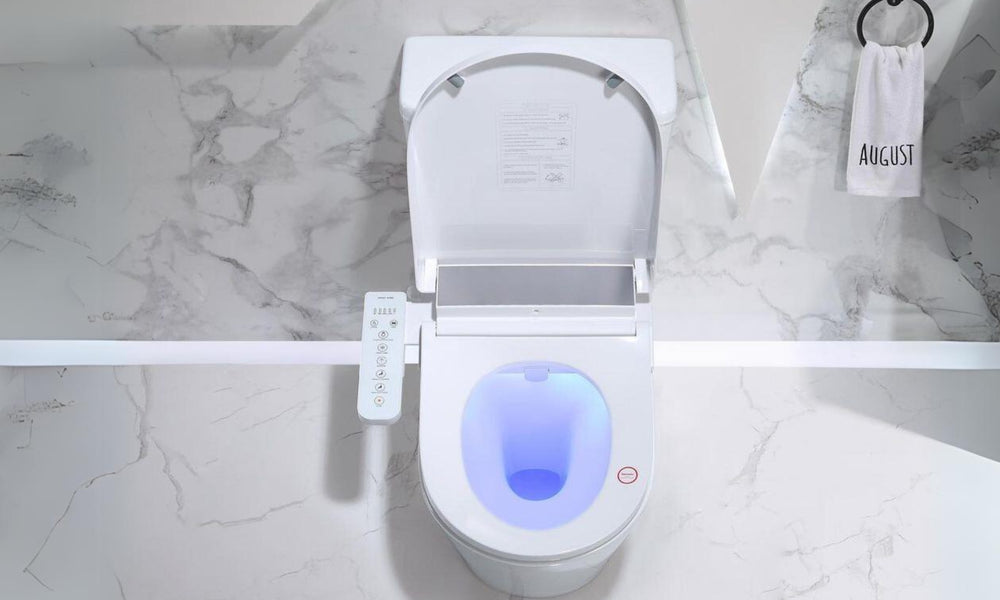
If you are shopping for a smart toilet in Australia, it is easy to get distracted by the “smart” features: heated seat, bidet wash, dryer, auto open/close, auto flush, remote control, deodoriser, self-cleaning functions. But the part that impacts your water bill and water use every single day is still the toilet flush, and that is exactly what the WELS label helps you compare.
WELS stands for Water Efficiency Labelling and Standards. It is a national scheme that regulates and labels certain water-using products sold in Australia. Toilets are one of the regulated product categories, which means a toilet generally needs to be registered and displayed with the WELS label information when supplied for sale.
This article breaks down what the WELS label is actually telling you, how to interpret litres per flush (especially for dual flush), what “stars” really mean in practice, and how to think about WELS when you are choosing between a full smart toilet suite and a retrofit bidet seat.
What Is The WELS Water Rating Label?
The WELS label is designed to make water efficiency easy to compare at a glance.
According to the WELS program’s consumer guidance, the label includes:
-
A star rating so you can quickly compare water efficiency
-
A rate of water consumption, such as litres per flush for toilets
-
Registration details such as a licence number and registration number
For toilets specifically, WELS labelling guidance also notes that the displayed information should include:
-
“WELS”
-
Star rating
-
For dual flush toilets: full, half, and average flush volumes in litres
-
For single flush toilets: the single flush volume in litres
-
The WELS registration number
So when you are looking at a smart toilet listing, the most important numbers on the label are the litres per flush value, because those are concrete.
What Do The Stars Actually Mean?
WELS uses a star system where, generally speaking, more stars means greater water efficiency. The WELS website explains the star rating is there so you can quickly compare products.
A crucial point: stars are only meaningful within the same product category. Comparing the stars on a showerhead to the stars on a toilet is not helpful. For smart toilets, you want to compare toilets to toilets.
Also, the stars alone are not the full story. The litres per flush is what tells you how much water is used each time you flush. The star rating helps you compare efficiency quickly, but litres per flush helps you understand the real-world impact.
Dual Flush Vs Single Flush On WELS
Dual flush - most common in modern toilets
Most modern Australian toilets are dual flush. A dual flush WELS entry will typically list something like:
-
Full flush litres
-
Half flush litres
-
An “average” litres per flush figure
WELS label requirements explicitly call out displaying full, half, and average flush for dual flush toilets.
Why the average matters: many households use the half flush more often than the full flush, so average helps you estimate typical use.
Australia’s energy.gov.au guidance also reinforces practical behaviour: using the half flush whenever possible maximises water savings.
Single Flush
Some toilets are single flush and will show one litres-per-flush number. In the smart toilet space, this sometimes appears in certain integrated “intelligent toilet” designs, depending on brand and model.
Example: A smart toilet as a single flush 5.4 L average with a WELS registration number. That is not “bad” by default, but it is usually less flexible than dual flush if you are trying to minimise water use.
How WELS Applies To Smart Toilets
Here is the simplest way to think about it:
1. A “Smart Toilet Suite” Still Has To Flush Like A Toilet
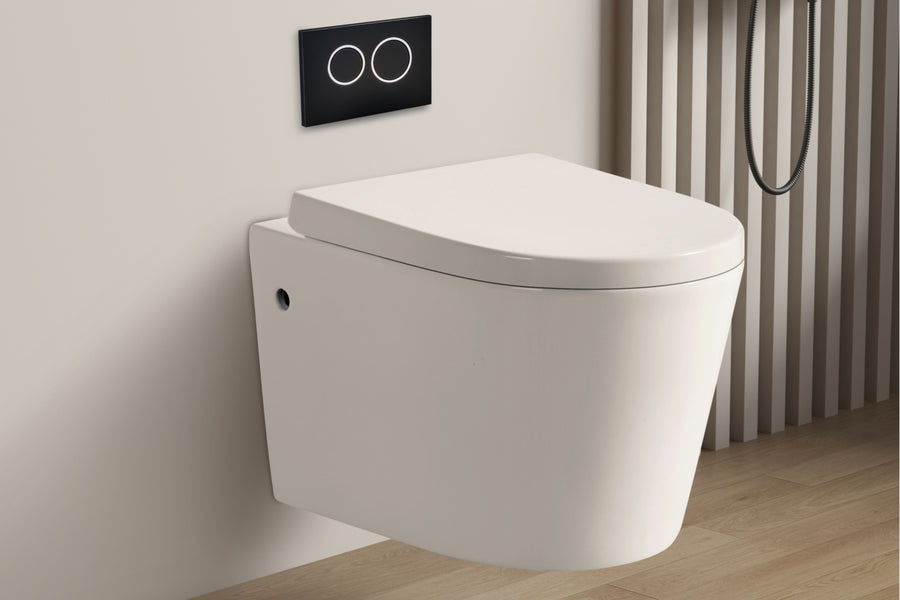
A fully integrated smart toilet is still a toilet, so WELS is relevant. You will see WELS star ratings and litres per flush figures on Australian product listings and documentation for many smart toilet suites. For example, multiple Australian retailers list smart toilet packages (including bidet seat functions) as 4 star WELS with 4.5/3 L dual flush.
2. The Bidet Functions Are A Separate Water-Use Question
WELS primarily helps you compare the flush water use of toilets. Smart toilet bidet features use water too, but those features are not what the WELS litres-per-flush number represents.
A practical takeaway:
-
If you are comparing toilets, WELS is the right tool for flush efficiency.
-
If you are comparing bidet wash features, look for other specs (water pressure settings, flow behaviour, and product compliance), because those do not show up as “litres per flush”.
Do Bidet Seats Have WELS Ratings?
In Australia, the WELS scheme regulates seven product types, including toilets and urinals, plus things like taps, showers, flow controllers, dishwashers, washing machines, and washer-dryers. Bidet seats are not listed in that regulated-products overview.
So if you are retrofitting a smart bidet seat onto an existing toilet:
-
Your toilet’s WELS flush performance is still whatever the existing toilet is rated at (if it is a WELS-rated model).
-
The bidet seat itself may not be “WELS-rated” in the same way a toilet is, even though it uses water.
This is why a common Australian approach is:
-
Keep or upgrade to a good WELS-rated toilet (efficient flush), then
-
Add a compliant smart bidet seat for functionality.
What Is A “Good” WELS Rating For A Smart Toilet?
There is no single universal answer because it depends on what is available and your priorities, but here are common practical benchmarks you will see in Australian listings:
-
4 star dual flush around 4.5/3 L is a widely seen modern efficiency level for many toilet suites and smart toilet packages.
-
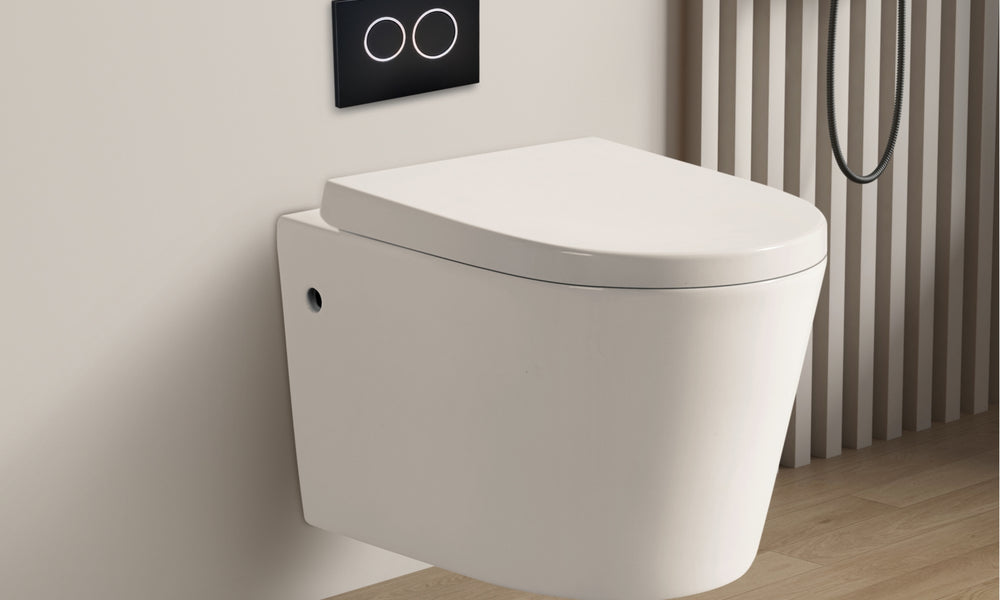
Some TOTO package listings in Australia show 4 star, 4.5/3 L for back-to-wall or wall-hung toilets plus WASHLET combinations.
If you are comparing two smart toilets and one is 4 star and the other is 3 star, the 4 star model is usually the more efficient choice. Still, always confirm the litres per flush, because the number is the clearest way to understand usage.
How To Read A Smart Toilet Listing Correctly
When you are looking at a product page, make sure you find:
-
WELS star rating
-
Litres per flush (full/half, and sometimes average)
-
WELS registration number (often present on listings)
If a listing talks a lot about “eco” or “water saving” but does not show WELS details, treat that as incomplete. WELS exists specifically so you do not have to rely on marketing claims.
How WELS Connects To TOTO Smart Toilet Functionality
If your focus is TOTO smart toilet functionality, WELS is still a key part of the story because TOTO tends to pair smart features with water-efficient flushing systems in many models and packages sold in Australia.
You will commonly see:
-
Dual flush operation (full and half flush options)
-
Efficient litres-per-flush figures on WELS-labelled listings
-
Smart conveniences like remote control functions and auto flush on certain configurations (model dependent)
Example: Australian listings for TOTO toilet plus WASHLET packages show WELS ratings and dual-flush litres per flush alongside smart seat functionality.
How To Choose Based on WELS
If Water Efficiency Is Your Top Priority
-
Prefer higher star ratings within toilets.
-
Prefer lower litres-per-flush numbers, especially on the half flush.
-
Actually use the half flush regularly, because that is where dual flush toilets save the most.
If Performance And Cleanliness Are Your Top Priority
Water efficiency should not come at the cost of needing frequent double flushing. Look for a toilet that is both water-efficient and designed for strong bowl wash performance. In practice, well-designed modern toilets can flush effectively at efficient volumes, which is why WELS exists as a comparison tool in a water-conscious country.
If you want smart features without changing the toilet
-
Keep your existing toilet (if it is decent and already efficient).
-
Retrofit a smart bidet seat.
-
Understand that WELS is still about the toilet flush, not the bidet wash.
This approach often delivers the “smart toilet” feel with the least disruption.
Rentals And Minimum WELS
WELS can also matter for compliance and property standards. For example, NSW guidance for rental properties notes that if a landlord wants to pass on water usage charges, they must meet certain water efficiency measures, including dual flush toilets with a minimum 3-star WELS rating (as of 23 March 2025).
Where to Buy Smart Toilets With Clear WELS Information in Australia
Smart toilet features are exciting, but the smartest way to choose is still by checking the fundamentals: WELS star rating, litres per flush (full, half, and average for dual flush), and the registration details that confirm you are comparing like for like. When a product page is clear about these numbers, you can make a confident decision based on everyday water use, not just marketing claims.
At Austpek Bathrooms, we make that comparison easier. Our range includes TOTO toilet and WASHLET combinations, plus fully integrated smart toilet options, with product information that highlights what matters for Australian homes: dual flush figures, WELS water efficiency, and the flushing setup behind the “smart” experience. If you are deciding between a full suite and a retrofit seat, remember that WELS mainly helps you compare flush performance, while bidet functions are a separate consideration for water use and compliance.
For renovations where every detail counts, choosing a smart toilet is not only about comfort features, it is also about reliable day to day operation and efficient flushing. If you want help narrowing down models by WELS rating, flush volumes, and the right configuration for your bathroom layout, Austpek can guide you to a setup that delivers hygiene, performance, and long term water efficiency.


