


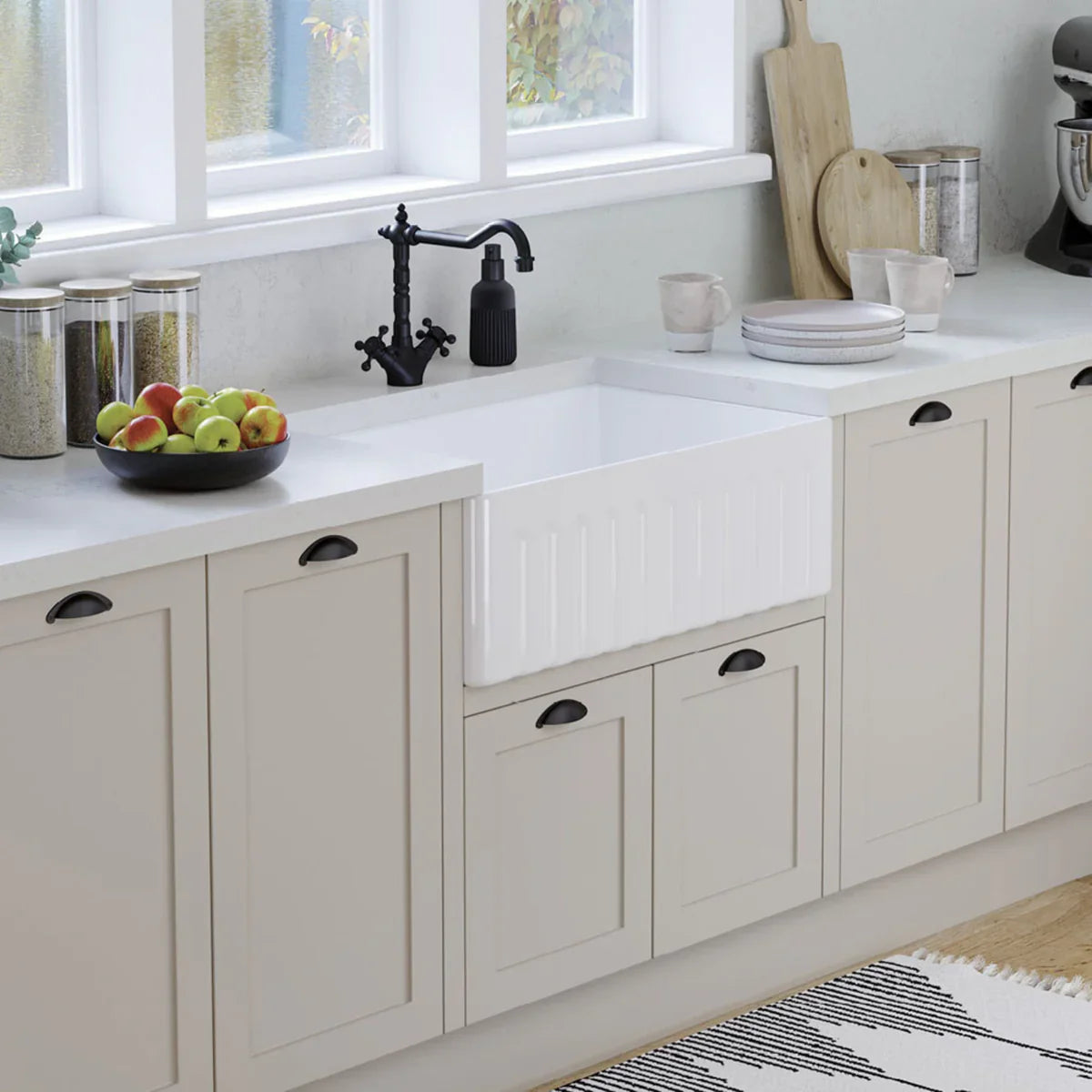
When you start shopping for a laundry vanity, you quickly run into terms like undermount, overmount, inset and drop‑in. They all describe how the sink sits with the benchtop, but they feel like jargon until you see what they mean in a real laundry. The right choice affects how your laundry looks, how easy it is to clean, and which sinks and benchtops you can actually use together.
To keep it simple, there are three main installation styles to think about for a laundry sink sitting in or on a vanity: undermount, overmount or drop‑in, and inset.
Undermount Laundry Sinks
An undermount laundry sink is fixed to the underside of the benchtop so the rim sits below the surface and the countertop edge is exposed around the bowl. From above, you just see the benchtop and a clean cut‑out, not a visible sink lip. This creates a very sleek, premium look that works especially well with stone or stone‑look tops on modern laundry vanities.
Undermounts are popular in premium laundries because you can wipe water and crumbs straight from the benchtop into the sink without hitting a raised edge. They also make the vanity feel more like custom joinery than a basic tub unit. The trade‑off is that you need a sufficiently strong, water‑resistant benchtop, and installation is a little more involved because the sink must be securely supported from below.
Oliveri Santorini Single Bowl Undermount Kitchen and Laundry Sink Matte Black
-
A granite composite bowl in matte black that pairs well with stone tops and modern laundry vanities.
Oliveri Professional Single Bowl Undermount Kitchen and Laundry Sink Stainless Steel
-
A thick 304 stainless undermount with a generous capacity suitable for bigger laundry tasks.
Overmount and Drop‑In Laundry Sinks
Overmount, drop‑in and top‑mount all refer to the same basic idea: the sink is dropped into a cut‑out from above and the rim rests on top of the benchtop. You see a visible edge or flange around the bowl that sits slightly proud of the surface. This is the classic way many laundry tubs and utility sinks are installed.
The big advantages of overmount and drop‑in sinks are flexibility and ease of installation. They work with a wider range of benchtop materials, including many laminates, and they are generally simpler to fit or replace because the rim itself helps support the weight. The downside is that the raised lip can collect water and grime, so you need to be a bit more deliberate about wiping around the edge.
On Austpek Bathrooms, several laundry sinks are designed for overmount installation and, in some cases, can also be undermounted:
Abey 45 Litre Single Bowl Laundry Sink with Overflow Stainless Steel 470mm
A classic deep laundry bowl that can be mounted top‑mount or undermount depending on your benchtop and look.
Seima Leto 700 Single Bowl Kitchen and Laundry Sink Stainless Steel 740mm
A large‑capacity sink suitable for above‑mount or undermount installation, ideal when you need more room for soaking and rinsing.
Aquaperla T304 Handmade Single Bowl Laundry Sink Gun Metal Grey 600mm
A handmade stainless sink in gunmetal that supports drop‑in, top‑mount, flush‑mount and undermount options, giving you a lot of flexibility with one product.
Inset laundry sinks
Inset sinks also sit into a cut‑out in the benchtop, but they are usually designed with a neater, thinner edge and sometimes sit closer to flush with the surface. In practice, many inset models are still technically overmount or top‑mount sinks, just with a slimmer, more refined profile.
In a laundry vanity, inset sinks suit homeowners who like a more built‑in look than a chunky tub edge but still want the practicality and flexibility of a sink that drops in from above. They can be a smart middle ground if you are working with benchtops that are not ideal for a true undermount, or if you want to keep installation straightforward while still lifting the overall look.
Several of the Seima stainless models on Austpek, such as the Seima Tetra 430 Single Bowl Kitchen and Laundry Sink Stainless Steel 430mm, can be used as neat overmounts with tight corners that read more like an inset design than an old‑style tub.
How Installation Type Affects Your Laundry Vanity?
The way your sink is installed changes more than just the look. It affects:
Benchtop Compatibility
-
Undermount sinks usually need solid, water‑resistant tops like engineered stone or high‑quality solid surface. Overmount and drop‑in styles are more forgiving and can often be used with laminate or similar materials.
Cleaning And Maintenance
-
Undermount sinks make it easier to wipe straight into the bowl, while overmount and inset sinks introduce a lip you need to clean around. That said, well‑designed rims and good silicone work can still keep maintenance simple.
Usable bench space
-
Larger drop‑in bowls with wide rims can eat into the bench area on compact vanities. Undermount or tight‑rim inset sinks can free up a little more surface, which matters in small laundries.
Overall Style
-
Undermount and slim‑rim inset sinks tend to feel more seamless and high‑end. Overmount and tub‑and‑cabinet units lean more toward a traditional or utility look, which can still be perfect in garages and secondary spaces.
Best Installation Type For Common Laundry Setups
For a small laundry that needs to do a bit of everything, a compact overmount or inset sink in a modest vanity can be enough, especially if you pair it with a tub‑and‑cabinet unit like the Poseidon Laundry Cabinet and Tub 390mm or 600mm White for deeper soaking. This keeps installation simple while still giving you a proper wet zone.
For a premium laundry vanity visible from the kitchen or hallway, undermount or neat inset sinks in a stone top often look best. Packages such as the Otti Hampshire Matte White 1300mm Base Laundry Cabinet with Stone Top and Sink and the larger Otti Noosa or Hampshire 1960mm Laundry Cabinet Packages combine moisture‑resistant cabinetry, stone tops and matching sinks to create a seamless built‑in feel.
In more utility‑heavy spaces like garages or rental laundries, a robust drop‑in tub on a cabinet is still hard to beat. Products like the Poseidon Laundry Cabinet and Stainless Steel Tub 555mm White or the Poseidon Laundry Cabinet and Tub 600mm White offer a deep bowl and enclosed storage in one piece, with a simple top‑mount installation that is easy to replace down the track.
Recommended Combinations From Austpek Bathrooms
Rather than thinking only about the sink, it helps to plan the combination of cabinet, benchtop and installation style.
-
A custom Timberline laundry base cabinet package with an optional sink and stone top lets you build a long run of storage, then choose an undermount or inset stainless sink such as the Seima Oros 450 or Seima Tetra 430 for a compact, modern wet zone.
-
A Timberline 915mm Laundry Cabinet with Laminate Top and Sink Package gives you a ready‑to‑install base cabinet, benchtop and sink, with cut‑outs done on site so you can decide whether a simple top‑mount or a closer‑to‑flush inset install suits your space best.
-
For a smaller all‑in‑one solution, the Poseidon Laundry Cabinet and Tub 390mm, 555mm or 600mm White ranges provide tub‑and‑vanity units that can sit alongside other cabinets or work solo in tight laundries.
These patterns give you clear upgrade paths: start with a compact tub‑and‑cabinet, move up to a full laundry vanity with an overmount or inset sink, or go all the way to stone tops and undermount bowls for a high‑end finish.
Common Mistakes To Avoid
A few practical points can save headaches later:
-
Matching undermount sinks with benchtops that are not suited to exposed cut edges, which can swell or chip over time.
-
Forgetting about tap placement, especially with thicker rims on some drop‑in and inset sinks, which can affect where mixers need to sit.
-
Choosing an oversized drop‑in tub on a short vanity and ending up with almost no folding space left.
-
Not considering how you will clean around the sink edge day to day, particularly if the laundry is heavily used.
Frequently Asked Questions
Is an undermount or overmount sink better for a laundry vanity?
-
Undermount usually gives a sleeker look and easier wiping, but overmount sinks are more flexible with materials and simpler to install. The best choice depends on your benchtop, budget and how “finished” you want the laundry to feel.
Can I use an undermount sink with laminate benchtops?
-
In most cases, undermounts are not recommended with standard laminates because the exposed edges can be vulnerable to water. If you want an undermount look, consider upgrading to stone or another solid surface.
Are inset and drop‑in laundry sinks the same?
-
Inset sinks are usually a type of drop‑in sink with a slimmer, more refined rim. They still sit from above, but are designed to look cleaner and more built‑in.
Which installation type looks most built‑in in a modern laundry?
Undermount sinks with stone tops typically look the most seamless, followed by slim‑rim inset sinks. Traditional overmount tubs and tub‑and‑cabinet units lean more toward a functional utility style.
If you are planning a new laundry or upgrading an old tub, it is worth deciding first how you want the room to feel, then matching that to the right combination of vanity, benchtop and installation style. Browsing undermount, overmount and inset‑capable laundry sinks alongside compatible vanities and cabinet packages on Austpek Bathrooms can help you see the options side by side and choose a setup that fits both your space and your routine.


