



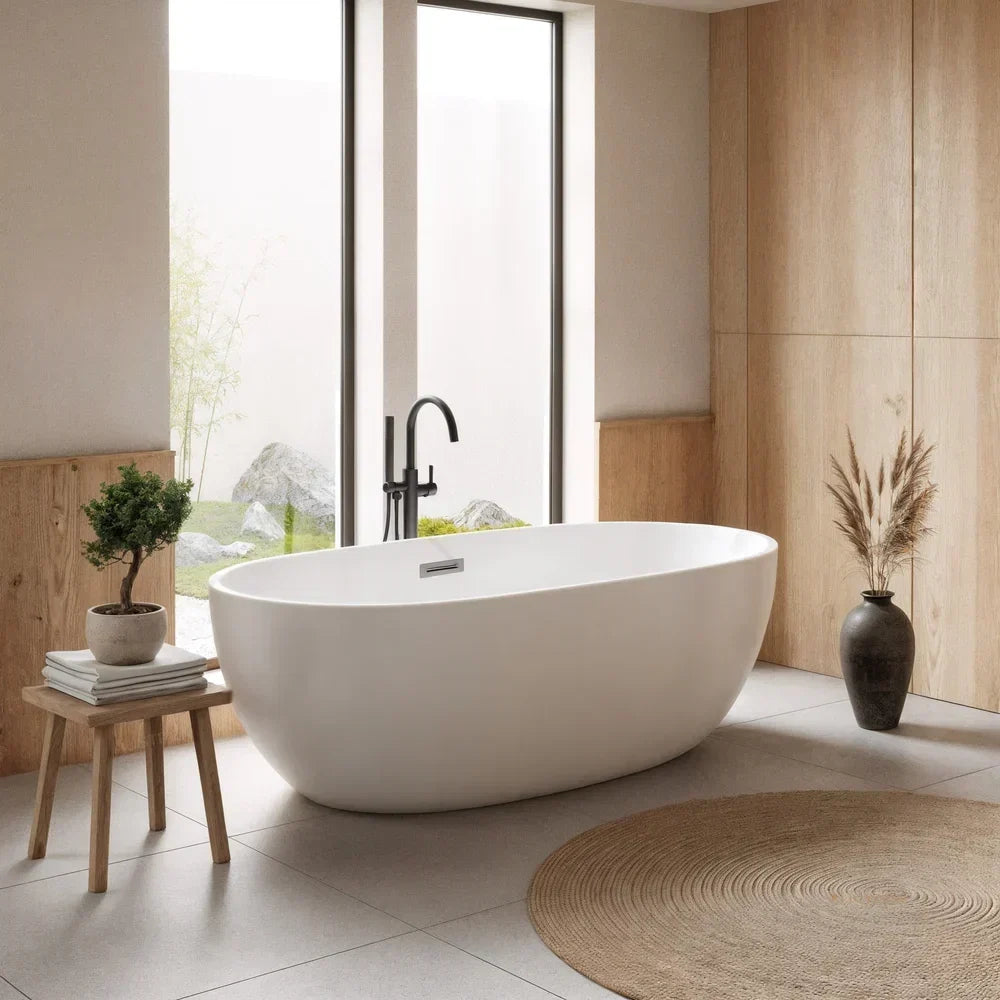
A yellowed or dull bathtub is almost always caused by a build-up of minerals, soap residue, or sun exposure rather than a fault with the tub itself, and in most cases it's preventable with a simple routine. Here's what causes it, how your water supply plays a part, and how to keep your bathtub looking bright and white for years, whatever it's made from.
What causes a bathtub to turn yellow
Yellowing typically comes from three things layering on top of each other over time: mineral deposits left behind as water evaporates, soap scum building up in a thin film, and UV exposure if your bathtub sits near a window. On its own, each of these is minor. Combined and left unaddressed for months or years, they gradually dull a bright white finish into something that looks tired and yellowed.
The fix isn't usually a deep clean or a harsh chemical, since those can actually make things worse. It's a light, consistent routine that stops the build-up from forming in the first place.
Water hardness and its effect on your bathtub finish

Hard water leaves mineral deposits (mainly calcium and magnesium) behind as it dries, and over time this filmy residue is one of the biggest contributors to a dull or yellowed-looking bathtub. The harder the water, the faster this build-up forms, which is why bathtub yellowing is a much bigger issue in some parts of Australia than others.
If you're in Sydney, this is good news: Sydney's water is consistently rated among the softest in the country, generally sitting somewhere between 40 and 57 mg/L, well under the 60 mg/L threshold for "hard" water. That's largely thanks to the Warragamba catchment, where rainwater runs over sandstone rather than mineral-rich rock, so it picks up very little calcium or magnesium before treatment. Compare that to cities like Perth or Adelaide, where hardness levels can climb well above 90 mg/L, and Sydney households have a real advantage when it comes to preventing scale and residue build-up in the bathtub.
That said, soft doesn't mean mineral-free. Even Sydney's mild hardness levels, combined with chlorine treatment, can leave a fine residue behind if water is left to evaporate on the tub surface rather than being wiped away. The fix is simple: a quick wipe-down after each bath keeps this from ever becoming visible.
Getting Your Bathtub Back to White
The most reliable way to restore a dulled or yellowed bathtub is a paste of bicarbonate of soda and water, left to sit for 15 to 20 minutes before a gentle scrub with a soft cloth and a rinse. This lifts mineral and soap residue without scratching the surface, and works on acrylic, enamel, and most composite finishes. For more stubborn build-up, a specialist bathtub cleaner formulated for your specific material is the safer next step, rather than reaching for something abrasive or highly acidic.
How to Get a Yellowed Bathtub White Again

For acrylic bathtubs, restoring whiteness comes down to gentle, non-abrasive cleaning paired with a light polish rather than a harsh chemical treatment. Acrylic is a solid colour through the whole material, so surface yellowing is almost always residue sitting on top rather than a permanent stain. A bicarbonate of soda paste followed by a specialist acrylic polish will usually bring back the original brightness. Avoid bleach, which can react with the acrylic and cause a dull, uneven finish rather than restoring it.
Preventing Yellowing on a Stone Bathtub
Stone and stone composite bathtubs benefit from a pH-neutral cleaner and a soft cloth used regularly, since these materials are naturally more porous than acrylic and can absorb residue if it's left to sit too long. Avoid vinegar and other acidic cleaners here in particular, since acid can etch stone surfaces, which then trap dirt and residue even more easily going forward, making yellowing worse over time rather than better. A light wipe-down after each use is the single best preventative habit for stone finishes.
Preventing Yellowing on an Enamel Bathtub
Enamel's hard, glass-like coating resists staining reasonably well, but soap scum and mineral deposits can still build up in a thin film over time, especially in bathtubs that see daily use. A weekly clean with a mild detergent and warm water, plus a quick rinse and wipe after each bath, prevents most enamel yellowing before it starts. If discolouration has already set in, a paste of bicarbonate of soda works here too, just avoid steel wool or anything abrasive, which can scratch the glossy coating and make future residue stick more easily.
What not to use when treating a yellowed bathtub

A few products consistently make yellowing worse rather than better, regardless of material:
-
Chlorine bleach, which can react with acrylic and some sealants, causing uneven discolouration rather than restoring whiteness
-
Undiluted vinegar or other strong acids, particularly on stone and composite surfaces, where etching leads to more residue build-up long-term
-
Abrasive powders and scouring pads, which create tiny scratches that trap dirt and accelerate future yellowing
-
Rubbing alcohol, which can soften acrylic and leave the surface more porous to future staining
A mild, pH-neutral cleaner and a soft cloth remain the safest default across every bathtub material.
A simple routine to keep your bathtub looking white
Most yellowing is avoidable with small habits repeated consistently, rather than the occasional deep clean:
-
Wipe the tub dry after each use to stop mineral and soap residue from settling as water evaporates
-
Rinse thoroughly after cleaning, since leftover cleaning product residue can also contribute to a dull film over time
-
Clean weekly with a mild, pH-neutral product suited to your bathtub's material
-
Keep curtains or blinds partly closed if your bathtub gets direct sun for long periods, since UV exposure alone can slowly yellow some acrylic finishes
-
Address any dripping tap promptly, since constant moisture and mineral exposure speeds up residue build-up in one spot
When yellowing needs more than a routine clean

If a bicarbonate of soda paste and a specialist cleaner haven't shifted the discolouration after a couple of attempts, it's worth considering whether the staining has gone deeper than surface residue. Long-standing mineral build-up, old scratches that have trapped dirt over years, or UV damage on acrylic can all sit below what a standard clean can lift. In these cases, a professional bathtub restoration service can often bring back most of the original finish without needing a full replacement, and it's a far cheaper option than assuming the tub needs replacing.
It's also worth checking your bathtub's warranty before trying anything beyond a gentle clean, since aggressive DIY restoration attempts can sometimes void cover that would otherwise handle genuine finish defects.
Choose a bathtub that stays brighter for longer
Quality materials and a well-sealed finish make a real difference in how well a bathtub resists yellowing over time. Explore Austpek's full range of bathtubs to find a freestanding, built-in, or spa bath backed by a genuine warranty, built to stay bright and white for years with the right care.

