How To Choose The Right Freestanding Basins
The right choice among these basins comes down to a handful of specs rather than looks alone. Material affects both maintenance and how the basin reads in the room, while tap hole configuration and waste type determine which tapware and plumbing setup will actually work. Standing height and bowl shape matter too, particularly if the basin needs to sit alongside existing tiling or a mirror already set at vanity height.
- Material: vitreous china or ceramic for classic durability, natural stone or polymarble for a sculptural finish, concrete for a textured, handmade look
- Tap hole configuration: check whether the basin is drilled for basin-mounted tapware or designed with no tap hole for a wall or floor-mounted mixer
- Waste type: most basins in this range need a 32mm non-overflow waste, sold separately unless stated on the listing
- Standing height: basins in this range typically stand between 800mm and 850mm, close to standard vanity height
- Bowl shape: round, oval and rectangular profiles suit different floor plans and tapware pairings
Types of Pedestal and Stone Basins in the Collection
This collection covers a mix of forms, from a classic freestanding pedestal basin through to solid sculptural pieces built for a statement powder room. Each style handles floor space and plumbing a little differently, which is worth weighing against the room it's going into.
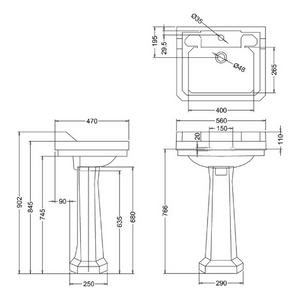
- Pedestal basins: a bowl mounted on a slim column that conceals the plumbing beneath it, a familiar silhouette for both period and contemporary bathrooms
-
Freestanding stone basin: a solid, sculptural profile in polymarble or natural stone, suited to an ensuite or powder room built around a statement piece
- Concrete basins: hand-cast, textured finishes with a more organic, handmade character
- Compact and offset bowls: suit powder rooms and smaller floor plans where space is tight
A Freestanding Basin vs a Vanity with Basin
A freestanding basin sits directly on the floor or on its own pedestal, so it doesn't need a benchtop or cabinet underneath, which frees up floor space in a powder room or ensuite. The trade-off is storage: there's nowhere nearby to keep toiletries within reach. If storage matters more than the sculptural look, a bathroom vanities range with an integrated basin is the more practical option, and a floor mounted vanity gives a similarly grounded look while adding drawer space underneath. Whichever option you choose, pair it with floor-mounted or wall-mounted tapware rather than a basin-mounted mixer if the basin has no tap hole.
Frequently Asked Questions
Does this style of basin need a tap hole?
It depends on the basin. Some are drilled for basin-mounted tapware, while others have no tap hole and are designed to pair with a wall-mounted or floor-mounted mixer. Check the product specification before choosing tapware.
What waste do these basins use?
Most freestanding basins in this range need a 32mm non-overflow waste, which is sold separately unless the listing states otherwise. Confirm compatibility with your plumber before installation.
How tall is a standard basin in this collection?
Most stand between 800mm and 850mm, close to standard vanity height, so tapware and mirror placement can follow the same guidelines used for a vanity.
What's the difference between a pedestal basin and a stone basin?
A pedestal design sits on a slim column that conceals the plumbing beneath the bowl. A stone basin is typically a solid, sculptural form in polymarble or natural stone, with a heavier and more substantial base than a traditional pedestal.
Do freestanding basins come with storage?
No, they don't include storage space, which is part of their minimalist appeal. If storage is a priority, a vanity with an integrated basin keeps toiletries closer at hand.