How to Choose Bathtubs
Material is usually the first decision, since it affects weight, heat retention and price before shape or colour come into play. From there, size and install type narrow the range down to what will actually fit the room, and waste configuration determines which tapware and plumbing setup will work with it.
- Material: acrylic for a lightweight, affordable option that's easy to install, stone or solid surface for heat retention and a heavier, more substantial feel
- Size: standard alcove baths run around 1700mm, compact tubs suit 1200mm to 1400mm spaces, and freestanding shapes vary by brand
- Waste and overflow: check whether a bath is set up with or without overflow before pairing it with tapware and a floor waste
- Floor loading: filled stone and cast iron baths are heavy, so confirm the floor structure can support a freestanding option, particularly on an upper level
- Install type: alcove baths fit into a three-wall recess, back to wall designs sit flush against one wall, freestanding baths stand clear on all sides
Types of Baths in our Collection
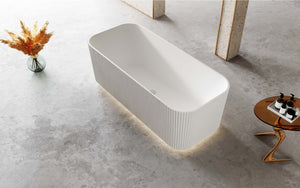
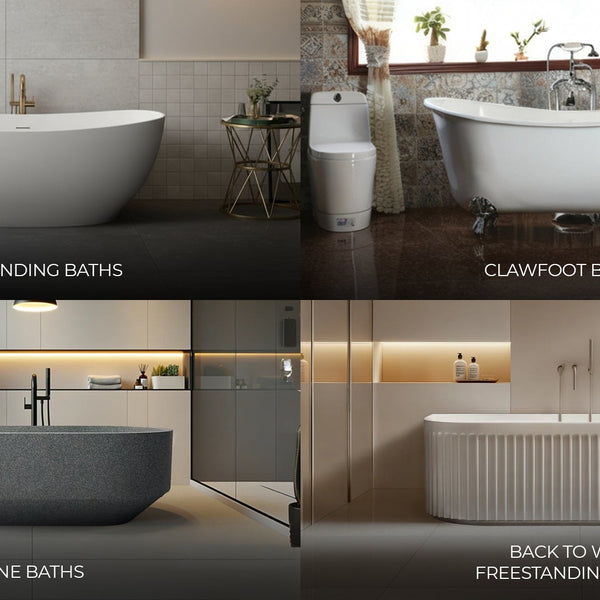
This collection spans every install type, from a statement centrepiece to a bath tub that fits neatly into an existing recess. A freestanding bathtub stands clear of the walls on all sides and works well as a genuine statement piece in an ensuite or main bathroom. Back to wall baths sit flush against a single wall, which suits a smaller footprint without losing the clean lines of a freestanding design. For a bath built around hydrotherapy rather than a simple soak, spa baths add jets while still fitting a standard alcove.
- Oval and round profiles: soften the room and suit a freestanding placement
- Rectangular and corner shapes: maximise bathing length within a fixed footprint
- Built-in and inset styles: tile in on three sides for a streamlined, low-maintenance finish
Custom and Bespoke Bathtub Options
For renovations that call for something outside a standard size or finish, Austpek's custom package quotes cover custom bathtubs built to a specific length, colour or install detail, alongside trade and commercial pricing for larger projects. Poseidon and Attica are two of the brands within this range, each offering acrylic and stone tubs across freestanding, back to wall and corner styles in a wide range of sizes.
Frequently Asked Questions
What's the difference between acrylic and stone bathtubs?
Acrylic is lightweight, affordable and warms quickly to the touch, which makes it easier to handle during installation. Stone or solid surface baths are heavier and retain heat for longer, with a more substantial feel, but cost more and need stronger floor support.
What size bathtub fits a standard bathroom?
A standard alcove bath is usually around 1700mm long, fitting into a typical three-wall recess. Compact tubs from around 1200mm suit smaller bathrooms or ensuites, while freestanding sizes vary by shape and brand.
Do baths need an overflow?
It depends on the model and the waste it's paired with. Some baths include a built-in overflow, while others are designed as non-overflow and rely on the floor waste to manage excess water, so check the specification before choosing tapware.
Can I get a bespoke bathtub made to a custom size?
Yes. Austpek offers custom package quotes for renovations that need a bath tub outside standard dimensions or finishes, alongside trade and commercial pricing for larger projects.
How much weight can a bathroom floor support for a freestanding bath?
This depends on the building's structure, particularly on upper floors, so it's worth confirming with a builder or engineer before installing a filled stone or cast iron bath. Acrylic baths are lighter and generally place less demand on the floor.